How to Choose Books for Your Toddler: A Parent’s Guide

Walk down any children’s book aisle and you face hundreds of covers, each one promising development, delight, and a lifelong reading habit. Your toddler will accept only a handful of them. Some books survive three readings in a row. Others sit closed after page one.
This guide breaks the decision into stages: age and development, physical format, text length, and how the book works during shared reading. Work through each section once, then use the framework near the end for every new book on your list.
Written with the assistance of Claude AI and reviewed by the Chilkibo Editorial Team using pediatric literacy research and child development sources.
What Age and Stage Tell You About a Book
Cover labels stating ages 0 to 3 cover a wide range of skills. A book fitting a 6 month old rarely fits a 30 month old, and the difference shows up in what the child does with the page.
Apologies for that stray tool call. Continuing the article directly:
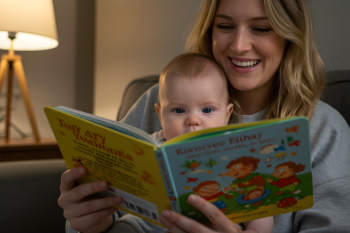
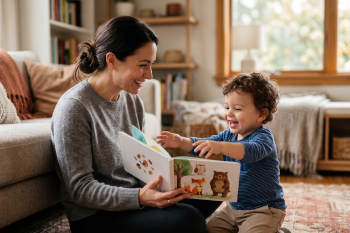
Government guidance on early literacy breaks toddler book needs into stages. Infants respond well to books with medium to large photos and bright, bold illustrations, and books with simple drawings of familiar things, actions, and events. Around age one, children start pointing to pictures and repeating labels, so books built around naming objects work well. By age two and older, toddlers follow short story sequences with familiar routines and a beginning, middle, and end. Head Start
Match the book in front of you to where your toddler sits right now, not to the age printed on the back cover. A toddler who mouths every board book still benefits from picture books read aloud beside them, even before they hold the pages themselves.
Look at the Physical Book Before the Story Inside
Toddlers handle books before they understand them. Page weight, corner shape, and page count decide whether a book survives daily use long enough to become a favorite.
Board books hold up to grabbing, chewing, and rough page turns during the years when fine motor control is still developing. Paper pages tear easily in small hands and often frustrate a toddler who wants to turn the page alone. If you want a full breakdown of when to switch formats, What Age Are Board Books For? When to Use Them and When to Switch covers the age ranges and warning signs in detail.
Check page count too. A 32 page picture book asks a two year old for more sitting time than most two year olds give willingly. Shorter books finish before attention runs out, and a finished book gets requested again far more often than one abandoned halfway through.
Check Text Density and Sentence Length
Word count per page matters more than plot complexity at this age. Toddlers process short phrases far better than paragraphs, and repeated words help them predict what comes next on the page.
Look for repetition, rhyme, and simple sentence patterns. Predictable text gives your toddler room to join in out loud, and this kind of active participation sits at the center of dialogic reading, an approach shown to improve expressive vocabulary among young children when adults ask open-ended questions while reading together. A book repeating the same sentence structure across pages invites this participation, and joining in builds vocabulary faster than passive listening alone. ScienceDirect
Avoid books packed with description or backstory. A toddler under three follows action and simple cause and effect, not internal motivation or subplots.
Judge the Story by What It Lets You Do Together
The strongest toddler books are not the ones with the best plot. They are the ones giving you room to point, name, ask, and pause.
The American Academy of Pediatrics links reading with infants and young children to a broader vocabulary, stronger school-age language skills, and fewer problem behaviors, and its guidance encourages parents to read aloud from birth onward. A method called dialogic reading builds on this by having the adult ask open questions during the story instead of reading straight through. Children read to this way move well ahead of children read to in a traditional style on tests of language development, sometimes gaining several months of progress after only a few weeks of practice. HealioReading Rockets
Pick books leaving space for this kind of back and forth. A page with one clear image and a short line of text invites a question. A page crowded with detail and dense text leaves no room for one. Our article on Questions to Ask During Toddler Story Time (That Actually Work) walks through specific phrases to try once you have the right book in hand.
A Simple Framework for Judging Any Book
After reviewing manuscripts for our own toddler catalog, we settled on three checks predicting whether a book earns repeat reads. We call it Fit, Function, and Flexibility.
Fit asks whether the format and length match your toddler’s current stage: board or paper, short or long, single word or short sentence. Function asks what the book does beyond entertainment: does it support naming, routines, emotions, or a specific word your toddler is working on. Flexibility asks whether the book holds up to a hundred rereads and rough handling without losing your toddler’s interest or falling apart at the spine.
A book passing all three checks earns a permanent spot on the shelf. A book passing only one is worth borrowing from the library before you buy it.
Watch Your Toddler, Not the Bestseller List
Bestseller lists and glowing reviews describe an average child. Your toddler is not an average, and the only reliable signal comes from watching what they do with the book in front of them.
Notice which books they bring to you on their own. Notice where they flip ahead, where they slow down, and where they ask you to stop and point at something again. A toddler asking for the same ten books on rotation tells you exactly what works, and this signal beats a five star rating every time.
Keep the active rotation small. A shelf with ten familiar books, refreshed every few weeks, holds a toddler’s interest better than a shelf with a hundred books they never fully explore.
When Personalized Books Fit Into the Mix
Toddlers start recognizing their own name well before they read words, and a book placing a child’s own name inside the story gives them an entry point regular picture books cannot offer. For a shy toddler or a reluctant listener, hearing their name on the page often turns a passive audience into an active participant, asking questions and pointing at the page. If you want to see how this fits alongside traditional books rather than replacing them, Best Personalized Books for Toddlers in 2026 breaks down what to look for.
The Four Checks Worth Running
Age and stage first. Physical format second. Text density third. Room for back and forth fourth. Run any book through these four checks before it earns a spot in your toddler’s rotation, and let your toddler’s own reaction settle any tie.
Sources
- American Academy of Pediatrics: Literacy Promotion, An Essential Component of Primary Care Pediatric Practice
- Reading Rockets: Dialogic Reading, An Effective Way to Read Aloud with Young Children
- HeadStart.gov: Tips for Parents, Choosing Books for Infants and Toddlers
- Zero to Three: How to Introduce Toddlers and Babies to Books
- Reach Out and Read: Why We Matter