Should You Read the Same Bedtime Book Every Night?
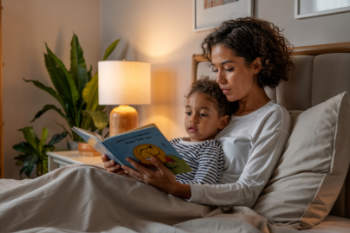
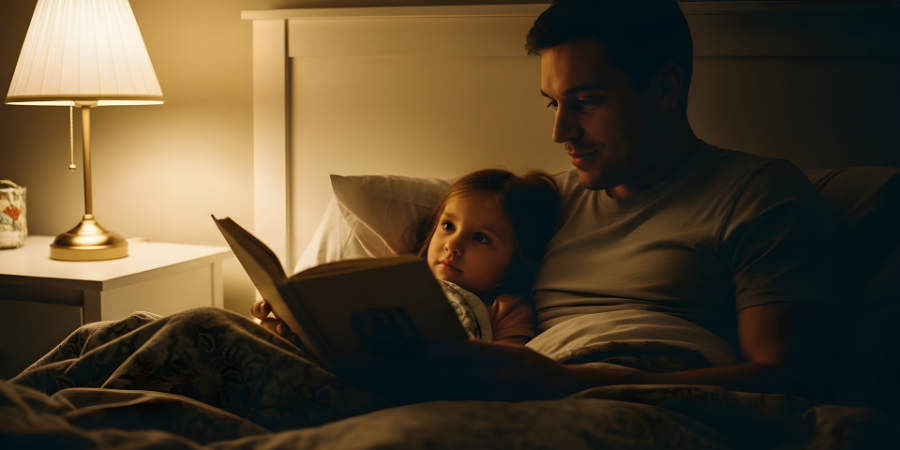
Your toddler hands you the same book every night. You read it once, she asks for it again, and by the fifth night this week you have the text memorized. This pattern is normal and it serves a purpose. Repetition is not a shortcut your child takes. It is a working part of how her brain builds vocabulary, language, and a sense of safety before sleep.
Written with the assistance of Claude AI and reviewed by the Chilkibo Editorial Team using pediatric literacy research and child development sources
The Short Answer
Yes, read the same bedtime book every night if your toddler wants it. Researchers who study early word learning find children retain new vocabulary far better when they hear one story told again and again, compared to hearing several different stories containing the same new words. Sleep researchers find a similar pattern with bedtime routines overall: toddlers who go through a consistent nightly sequence settle faster and wake less than toddlers whose evening routine changes often. A repeated story is not a stalling tactic on your part. It is a structure your child’s brain and nervous system rely on.
What Repetition Does For A Toddler’s Brain
Researchers at the University of Sussex tested this directly with three-year-olds and two invented words for unfamiliar objects. One group heard three different storybooks containing the same new words over the course of a week, while another group heard just one of the stories repeated. When tested a week later, the children who heard a single story remembered the new words far better than the children exposed to three different stories. ResearchGate
The explanation is straightforward. Repetition lets a young brain hear a word in the exact same sentence, tone, and picture context multiple times, and this consistency locks the word into memory. Switching stories nightly, ironically, gives your child less consistent exposure to any single word, even though it feels like you are offering more variety.
National early learning guidance also encourages parents to build reading into a regular time each day, like bedtime, and notes that toddlers often ask to hear the same books over and over as part of thriving on routine. American Academy of Pediatrics
For more on making read-aloud sessions count, our guide on how to read aloud better covers pacing and pausing techniques that pair well with a repeated story.
Why The Same Story Calms A Child At Bedtime
Bedtime asks a toddler to do something hard: stop playing, separate from you, and fall asleep alone in the dark. A familiar story lowers the difficulty of that transition.
Child development researchers at ZERO TO THREE describe consistent routines as a source of comfort and safety for babies and toddlers. Knowing what happens next gives young children a sense of security and emotional stability, along with a sense of control over what feels like an unpredictable process to them. Playto
Sleep researchers testing structured nightly routines with infants and toddlers found significant reductions in problematic sleep behaviors, improvements in how quickly children fell asleep, and fewer and shorter night wakings. Toddlers with a consistent routine were also less likely to call out or get out of bed during the night. ScienceDirect
A repeated bedtime book works as the emotional anchor inside a routine your child’s nervous system already trusts.
For a full nightly structure built around this idea, see our 15-minute bedtime routine guide.
Personalized Books Change The Repetition Equation
Most research on repeated reading looks at generic storybooks. A newer body of research looks specifically at personalized books, where a child’s name and likeness appear inside the story, and the findings add a layer worth knowing.
In a study led by researcher Natalia Kucirkova, toddlers and parents were filmed reading a personalized book made for the child, a matching non-personalized book, and the child’s own favorite, already well-worn book. Children and parents smiled and laughed more often during the personalized book than during the non-personalized one, and children showed even higher vocal engagement with the personalized book than with their own favorite, already-repeated book. Follow-up research linked reading personalized print books to faster learning of new words compared to non-personalized versions. ResearchGate
For your bedtime rotation, this means a personalized book holds your toddler’s attention at a level a repeated generic book does not fully match, even one she already loves. Repetition still works in the personalized book’s favor, since your child hears her own name in the same sentences night after night, deepening the familiarity researchers link to word learning. The personalization itself adds a separate layer of engagement on top.
See our breakdown of why personalized books work better than regular story time for more on what changes when your child sees herself in the story.
A Simple Routine For Choosing Bedtime Books
Reading one single book every night indefinitely works for some families and wears thin for others. A small rotation gives you a middle path.
- Keep two or three books in nightly rotation instead of one. Let your toddler choose from that small set each night.
- Add a new book to the rotation only when an old one gets retired, not on top of it. Two or three total books deliver the repetition benefit without exhausting you.
- Read the least familiar book first, then close with the most requested, most familiar one. Toddlers settle faster with a familiar ending near sleep.
- Keep the same reading voice, pacing, and page order every time. Consistency in delivery matters as much as consistency in title.
Signs Your Toddler Is Ready For A New Book
Watch for these signals instead of swapping books on a fixed schedule.
- She recites full lines before you read them.
- She flips ahead without waiting for you to turn the page.
- She loses interest partway through most nights.
- She starts asking questions the book does not answer, a sign her attention has outgrown the material.
None of these signs mean repetition stopped working. They mean this specific book reached the end of its usefulness, and a new one will take over the same job.
Sources
Horst, J. S., Parsons, K. L., & Bryan, N. M. (2011). Get the Story Straight: Contextual Repetition Promotes Word Learning From Storybooks. Frontiers in Psychology. pmc.ncbi.nlm.nih.gov/articles/PMC3111254
University of Sussex (2011). Again, Again! Why Repetition in Reading Helps Children Learn More. sussex.ac.uk/broadcast/read/7041
American Academy of Sleep Medicine (2009). Study Shows Institution of a Consistent Nightly Bedtime Routine Improves Sleep in Infants and Toddlers as well as Maternal Mood. aasm.org
ZERO TO THREE. Creating Routines for Love and Learning. zerotothree.org
Kucirkova, N., Messer, D., & Whitelock, D. (2013). Parents Reading With Their Toddlers: The Role of Personalization in Book Engagement. Journal of Early Childhood Literacy. journals.sagepub.com
Office of Head Start. Read It Again! Benefits of Reading to Young Children. headstart.gov