Why Personalized Books Can Give Story Time a Boost
Every parent has watched it happen. A toddler squirms through a regular story, then sits still the moment their own name shows up on the page. It looks like magic. It isn’t. It’s a well-documented feature of how young children process attention and self-relevance, and the research behind it is more specific, and more limited, than most articles on this topic let on.
Written with the assistance of Claude AI and reviewed by the Chilkibo Editorial Team using pediatric literacy research and child development sources
Here is what the evidence supports, where it stops short, and how to use personalized books well.
What “Personalized” Means
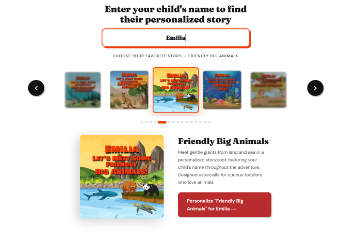
Researchers split personalization into two levels. The simple version, sometimes called nominal personalization, swaps the child’s name into an existing story. The deeper version builds the plot around the child’s actual choices, interests, or experiences. Most personalized books on the market, Chilkibo’s included, sit closer to the nominal end: your child’s name is woven through an illustrated story built around a theme, like animals, bedtime, or a first big feeling.
This distinction matters because the two versions do not produce identical results in studies, and treating them as interchangeable is where a lot of marketing claims go wrong.
What the Research Shows About Attention and Connection
Sarah McGeown and Kristin Conradi Smith, in a 2024 piece in The Reading Teacher, describe reading engagement as having four separate parts: behavioral (does the child stay with the book), cognitive (are they processing it), affective (do they feel something), and social (do they talk about it with others). A child’s name in a story speaks directly to the affective piece. Seeing yourself in a book creates an emotional hook a generic character rarely matches, and this hook tends to pull the other three dimensions along with it.
This lines up with what parents report anecdotally: kids interrupt more, point more, and ask to hear their own book again. None of this is invented. It’s not the same as a precise percentage on attention span, and no study we found puts a hard number on it for toddlers specifically.
What the Research Shows About Learning
Natalia Kucirkova, who has spent over a decade studying personalized books, summarized her own findings in a 2021 Scientific American piece. Her team found reading personalized print books was linked to faster learning of new vocabulary words compared to non-personalized print books. This is a real result, and a useful one.
The same research also found something publishers rarely mention: when the comparison moved to digital books, personalized and non-personalized sections showed no difference in word learning. Format matters. A related 2021 meta-analysis by May Irene Furenes, Kucirkova, and Adriana Bus, covering 39 studies and over 1,800 children, found digital books differing from their print version only by being digitized led to lower comprehension scores. Adult involvement during print reading did more for comprehension than the interactive features built into digital books.
For a print-first personalized book, this is a point in its favor. It also means claims about personalized apps or screen-based personalization should be held to a different standard than claims about a printed book you read together.
What the Research Says About Self-focus and Sharing
One fair question parents raise is whether a book built around a child trains them to focus mainly on themselves. A 2021 study by Ellen Kruse, Isabelle Faller, and Kirsten Read in Early Childhood Education Journal tested this directly with preschoolers. Children heard a personalized story about sharing, a non-personalized version of the same story, or an unrelated control story. Kids who heard the personalized version referred to themselves more during retelling, fitting the idea they connect more strongly with a story about them. The study found no significant difference between the three groups in how well children understood the sharing lesson or applied it afterward in a sticker-sharing task.
Read plainly, this means personalization did not hurt prosocial understanding, and it did not clearly improve it either, at least not in this one study. This is a more modest and more honest claim than “reduces self-focus” or “builds empathy,” and it’s worth saying so.
Where the Evidence Runs Thin
Almost all of this research studied preschool and early elementary children, generally ages three to eight. Direct evidence for the 0-3 range, Chilkibo’s core age group, is thinner. Toddlers under two are still building basic name recognition and object permanence, a real developmental foundation worth understanding on its own (our piece on name recognition skills in toddlers walks through this stage in detail). Extending preschool findings down to 18-month-olds is a reasonable inference, not a proven one, and any honest article on this topic should say so instead of presenting toddler-specific numbers no study measured.
What to Look for in a Personalized Book
The research points to a few practical markers of quality, independent of age:
The story holds up without the personalization. If you swapped the name back out and the book would fall flat, the personalization is doing all the work the plot should be doing.
It’s a book you’ll read together, not one your child opens alone on a tablet. The comprehension advantage in the research shows up with adult involvement, not with unsupervised screen time.
It fits general good-book fundamentals first. Strong pacing, a clear emotional arc, and illustrations holding attention still matter more than the name on the cover (we cover this in more depth in our piece on what makes a good children’s book).
Bringing Personalization Into Everyday Reading
Personalized books work best as one part of a mixed reading routine, not a full replacement for other stories. Traditional books expose kids to characters and situations outside their own experience, building perspective in a way a book about the child alone does not. A personalized bedtime story ending with the child character settling down to sleep supports a calming routine, and it pairs naturally with early board books during the years before your child has the fine motor skills for regular pages (see our guide to board books for babies and toddlers).
The honest version of this topic is still a good one. Personalized books have a real, if modest and format-dependent, edge in engagement and vocabulary learning. They are not a shortcut to advanced reading skills, and no study says they extend attention span by a fixed multiple. Used alongside a normal mix of stories, with an adult reading along, they are a solid addition to a young child’s bookshelf. This is a smaller claim than “works better than regular story time” in every case, but it’s the one the evidence backs.
Sources
McGeown, S., & Smith, K. C. (2024). Reading Engagement Matters! A New Scale to Measure and Support Children’s Engagement with Books. The Reading Teacher, 77(4), 462-472.
Kucirkova, N. (2021). The Educational Power and the Limits of Personalized Children’s Books. Scientific American.
Furenes, M. I., Kucirkova, N., & Bus, A. G. (2021). A Comparison of Children’s Reading on Paper Versus Screen: A Meta-Analysis. Review of Educational Research, 91(4), 483-517.
Kruse, E., Faller, I., & Read, K. (2021). Can Reading Personalized Storybooks to Children Increase Their Prosocial Behavior? Early Childhood Education Journal, 49(2), 273-282.