Best Baby Books for the First Year: Books for Ages 0–12 Months
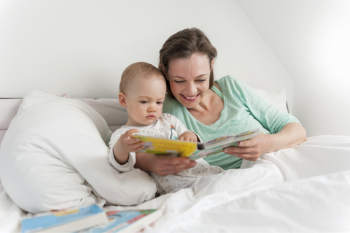
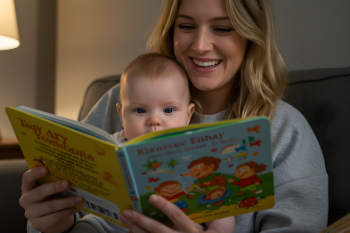
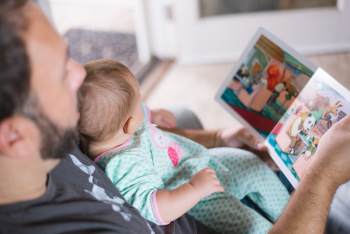
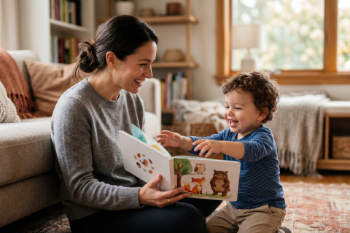
You do not need to wait until your baby understands words to start reading together. Newborns benefit from your voice, its rhythm, and the closeness of sharing a book.
The American Academy of Pediatrics (AAP) recommends shared reading beginning at birth. Its 2024 policy statement links reading together to early relationships, language, cognitive, and social-emotional development. In infancy, reading is not about letters or plots. It is about warm back-and-forth through words, pictures, sounds, and touch.

Written with the assistance of Claude AI and reviewed by the Chilkibo Editorial Team using pediatric literacy research and child development sources.
A few pages at a time is enough. Follow your baby’s attention rather than finishing every book.
How to Choose Baby Books for the First Year
Look for these five features:
- Simple, recognizable pictures. Babies, animals, food, and household objects give you something to name and talk about.
- Repetition and rhyme. Repeated phrases let babies hear the same language patterns again and again.
- Durable materials. Babies explore with their hands and mouths. Board and cloth books outlast paperbacks.
- Short text. A few words per page leave room for your own descriptions.
- Ways to participate. Animal sounds, textures, mirrors, and peekaboo flaps give you more ways to interact.
Reach Out and Read recommends developmentally appropriate formats. These include high-contrast books for newborns and board or cloth books for older infants.
Books for Babies 0–6 Months
In the first six months, your baby is building visual attention, listening skills, and early communication. The AAP notes that babies see best about 6 to 10 inches from their face, so hold the book close. Three types work well:
- High-contrast books. Bold black-and-white shapes suit the early weeks, when visual abilities are still developing.
- Books with baby faces. Babies are drawn to faces. Photographs let you point and describe expressions, such as “Look at the smiling baby.”
- Lullaby and nursery rhyme books. You do not need to sing well. Your baby benefits from your voice and its rhythm.
Books for Babies 6–12 Months
According to the AAP, babies at 6 to 8 months often hold books and pat the pictures. At 9 to 11 months, many reach for one of two books you offer. This is a good time for more interactive formats:
- Board books with familiar objects. Point, name, and pause so your baby can respond with a sound or gesture.
- Touch-and-feel books. Choose well-made books and supervise use.
- Peekaboo and lift-the-flap books. Follow your baby’s interest instead of expecting them to work every flap.
- Animal and rhyming books. Make the animal sounds and leave room for a reaction.
Classic Baby Books Worth Considering
These are well-established titles, not a scientifically ranked list. They are included for short text, repetition, and strong read-aloud rhythm.
- Brown Bear, Brown Bear, What Do You See? by Bill Martin Jr. and Eric Carle. A repeated question-and-answer pattern with colorful animals.
- Goodnight Moon by Margaret Wise Brown. Repetition and a calm bedtime pace. Choose the board book edition.
- The Going to Bed Book by Sandra Boynton. Short, rhythmic, and good for a bedtime routine.
- Moo, Baa, La La La! by Sandra Boynton. A playful sound book that invites repetition.
- Where’s Spot? by Eric Hill. A simple hide-and-seek story with flaps.
- Dear Zoo by Rod Campbell. Lift-the-flap animals with a predictable structure.
- Global Babies by Global Fund for Children. Photographs of babies from around the world.
- Ten Little Fingers and Ten Little Toes by Mem Fox. A rhyming celebration of babies everywhere.
- The Very Hungry Caterpillar by Eric Carle. Colors, food, and counting. Pick the board book for younger babies.
Many of these stay useful as your baby grows. You do not need to replace the shelf every few months.
A Simple Framework for Building Your Baby’s First Library
Instead of buying dozens of books, start with one book from each category:
| Book Category | What It Offers | When to Introduce |
|---|---|---|
| High-contrast book | Simple visual patterns | Newborn |
| Photographic baby book | Faces and familiar people | Birth onward |
| Rhyming book | Rhythm and repeated language | Birth onward |
| Interactive book | Touch, movement, and exploration | Around 4–6 months, depending on format |
| First-word or bedtime book | Familiar objects and a routine | Especially useful toward 9–12 months |
These are suggested starting points, not developmental deadlines.
How We Chose These Recommendations
This is an editorial selection, not a clinical study or a ranked test. It draws on the AAP’s guidance on shared reading and parent-child interaction and on Reach Out and Read’s guidance on age-appropriate book formats. We favored titles with short text, repetition, sturdy board book editions, and a strong read-aloud rhythm.
Board Books, Cloth Books, and Picture Books
| Format | Main Advantage | Best Use |
|---|---|---|
| Board books | Thick, sturdy pages | Everyday infant reading |
| Cloth books | Soft textures | Supervised sensory exploration |
| High-contrast books | Clear visual patterns | Early infancy |
| Touch-and-feel books | Different textures | Interactive reading |
| Traditional picture books | Detailed illustrations and stories | Parent-led reading |
You do not have to avoid traditional picture books. Just turn the pages yourself while your baby is still learning. Check the manufacturer’s age guidance, inspect books regularly for loose parts, and supervise with flaps and attached features.
How to Read With Your Baby
The AAP encourages interactive reading rather than one-way storytelling. Six habits help:
- Start early. Your voice is enough in the newborn period.
- Keep it short. Stop when your baby loses interest.
- Point and name. Say “Dog. Woof, woof!” as you point.
- Vary your voice. Use different sounds for animals and rhymes.
- Repeat favorites. Familiar phrases are comforting, and rereading is fine.
- Build a routine. After a nap or before bed works well. See our guide to creating a bedtime reading routine.
After the First Birthday
The CDC’s 12-month milestones include playing simple games such as pat-a-cake and using special names for familiar people. These make good book-sharing moments. Try first-word books, animal books, rhyming stories, and books about eating, bathing, and sleeping. Children vary. Some like turning pages, and others prefer pointing or listening. For next steps, see our guide on how to choose books for toddlers.
Frequently Asked Questions
When should I start reading to my baby?
From birth. The AAP recommends shared reading in infancy, and newborns benefit from your voice and closeness.
How many books should I read each day?
There is no required number. One or two short sessions work, and so do a few pages several times a day. Follow your baby’s interest.
Are books for 0–6 months different from books for 6–12 months?
Often, yes. Younger babies suit high-contrast images, faces, and rhythmic language. Older babies enjoy sturdy board books, textures, and interactive features. Earlier favorites stay useful.
Do I need different books for a girl or a boy?
No. Animals, rhymes, familiar objects, and interactive pages suit all babies. Choose by your baby’s interests.
What is a good baby shower gift?
A small set works well. Pair a bedtime book, an animal book, and a photographic board book. A first-year memory book also makes a thoughtful keepsake for photos and milestones.
Give Your Baby a Good Start With Books
The best first-year books are the ones you enjoy sharing. Start with a few sturdy titles that offer different pictures, sounds, and interactions. Return to favorites as often as your baby likes.
As your child grows, you might also consider personalized storybooks. Chilkibo Publishing creates personalized books for children ages 0–3, with the child’s name throughout the story. Short text, colorful animal illustrations, and interactive questions encourage parents and children to share the reading experience.
Sources and Further Reading
- Klass P, Miller-Fitzwater A, High PC, AAP Council on Early Childhood. Literacy Promotion: An Essential Component of Primary Care Pediatric Practice: Policy Statement. Pediatrics. 2024;154(6):e2024069090.
- How to Share Books with Your Baby. HealthyChildren.org, American Academy of Pediatrics.
- Reach Out and Read. Guidance on age-appropriate books and reading with infants.
- CDC Developmental Milestones.