Can a 2-Year-Old Learn to Read?
Most two-year-olds do not read the way adults picture reading: sounding out letters and turning them into words. What happens at this age looks like reading from across the room. Up close, it works differently.

Reviewed by the Chilkibo Editorial Team using pediatric literacy research and child development sources
What Reading Looks Like at Age 2
A 2014 study on toddler reading programs, cited by Healthline, found something different from what parents assumed. Kids who appeared to read along with a book or a DVD were repeating memorized text, not decoding it. Toddlers pick up patterns fast. They match sounds to pictures they’ve seen before. This is not the same skill as looking at new words and sounding them out.
Most children begin decoding words between ages six and seven. Some show signs earlier, around four or five. A few read earlier still. None of this signals a problem if your two-year-old shows no interest yet. The groundwork gets built years before the skill itself appears.
What Your Toddler Builds Right Now
Two-year-olds build pre-reading skills instead of reading itself. Vocabulary grows fast at this age. Kids start noticing marks on a page carry meaning. They pick up on the left-to-right flow of text. They get comfortable holding books and turning pages.
The American Academy of Pediatrics updated its literacy guidance in 2024, recommending parents read aloud from infancy through kindergarten. The policy statement points to reading aloud as a tool for building parent-child attachment and stimulating brain development, not only as an academic head start. Shared reading strengthens the relationship first. Literacy skills follow from this foundation.
Read Aloud Every Day
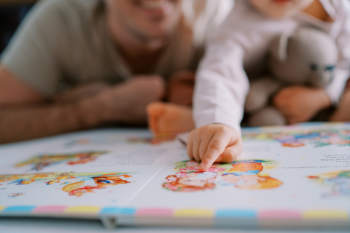
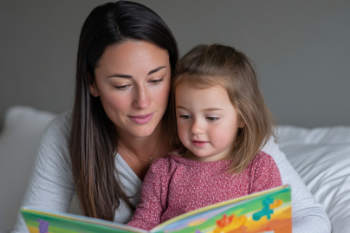
Reading aloud remains the single most effective habit for building pre-reading skills. Trace the words with your finger as you read. It shows your toddler the direction text moves across a page. Use different voices for different characters. Change your volume and pace to hold attention. None of this needs to be polished. Toddlers respond to enthusiasm, not performance.
Let Your Toddler Lead
Hand your toddler the choice of book. Read the same book every night if your toddler asks for it. Repetition builds recognition, and recognition builds confidence. Ask open questions while you read, like what happens next in the story. Questions like this turn a passive activity into one your toddler helps drive.
Keep Books Within Reach
Stock books in every room your toddler spends time in, not just the bedroom. Low shelves and floor baskets work better than tall shelves. When books stay visible and reachable, toddlers pick them up on their own between story times. This builds the habit outside scheduled reading.
From Board Books to Paper Pages
Board books make sense for younger toddlers. Thick pages survive chewing, bending, and rough handling. Around age two, most kids gain the fine motor control to turn single paper pages without tearing them. This is a natural point to introduce paperback books alongside board books, especially ones with sturdier binding built for small hands. The switch isn’t about outgrowing pictures or stories. It’s about matching the book format to your toddler’s developing grip and page control.
Play With Letters and Rhymes
Point out letters on cereal boxes, street signs, and grocery store aisles. Ask your toddler to spot letters during errands, at the library, on playground equipment. This turns letter recognition into a game instead of a lesson. Rhyming works the same way. Ask what rhymes with a simple word like cat or dog. Nursery rhymes build the same skill through repetition and rhythm.
Watch for Readiness, Don’t Force It
Some toddlers show curiosity about letters and print early. Others show none of this until well past age two. Both are normal. Pushing a toddler who isn’t interested tends to build resistance instead of skill. Step back, wait a few months, and try again. Interest driven by the child produces better outcomes than pressure applied by a parent.
A two-year-old builds the foundation for reading well before decoding actual words. Reading aloud daily, keeping books accessible, and following your toddler’s interest do more for long-term literacy than any early reading program. The reading itself comes later. The habit starts now.
Sources
- American Academy of Pediatrics, “Literacy Promotion: An Essential Component of Primary Care Pediatric Practice” (2024): https://publications.aap.org/pediatrics/article/154/6/e2024069090/199467/Literacy-Promotion-An-Essential-Component-of
- Healthline, “Ready to Teach Your Toddler to Read? Activities, Books, and More”: https://www.healthline.com/health/parenting/how-to-teach-toddler-to-read
- Nemours KidsHealth, “Toddler Reading Time”: https://kidshealth.org/en/parents/reading-toddler.html
- PBS Kids for Parents, “9 Early Literacy Activities for Kids”: https://www.pbs.org/parents/thrive/learning-at-home-9-early-literacy-activities