Why Do Toddlers Like Repetition?
Every parent of a toddler hears the word again dozens of times in a single week. Your child asks for the same book, the same song, the same walk to the park, night after night. The pattern looks stubborn on the surface, but child development research offers a clearer explanation. Toddlers seek repetition because their brains build knowledge through repeated exposure, not single encounters. Each repeat wires new connections, teaches a fresh detail, and gives your child a sense of control in an unpredictable world.
Written with the assistance of Claude AI and reviewed by the Chilkibo Editorial Team using pediatric literacy research and child development sources
What Happens in a Toddler’s Brain During Repetition
Brain wiring depends on repetition. Harvard neuroscientist Charles Nelson explains it directly: when a group of neurons needs to develop into a working circuit, they need to fire together over and over, and “neurons that fire together, wire together.” From the late prenatal weeks through the first few years of life, the brain overproduces synapses, the connections between neurons, taking advantage of this window of plasticity to learn and build new circuits. As those circuits get established through repeated experience, unused synapses get pruned away.
ZERO TO THREE, a nonprofit focused on early childhood research, describes the same process in practical terms: synaptic connections strengthen through repeated positive experiences, and these connections help toddlers build the skills they need to thrive. Asking for the same story every night is not a stall tactic at bedtime. It is the mechanism your toddler uses to strengthen a specific pathway until the story, song, or skill feels secure.
Repetition Creates a Sense of Safety
A pull toward the familiar starts before birth. In the third trimester, a fetus can already taste, smell, and hear enough to form early preferences, including a draw toward familiar flavors from the mother’s diet and familiar sounds like her voice. Within a few hours of birth, a newborn already shows a preference for the mother’s face over an unfamiliar one.
This pull toward the familiar continues well past infancy. A toddler’s day fills with new faces, new rules, and new sounds, most of it decided by someone else. A familiar book, read the same way every night, hands back a small, predictable piece of that day, along with a sense of control that a toddler rarely gets elsewhere. This matters most at bedtime, when a known story signals that the day is winding down and nothing unexpected is coming.
Repetition Builds Vocabulary
A well-known 2011 study led by psychologist Jessica Horst at the University of Sussex tested this directly. Researchers created nine storybooks, each containing two made-up name-object pairs, and read them to 3-year-olds three times over one week. One group heard the same story repeated all three times. The other heard three different stories that each contained the same two new words. Both groups did equally well on a test given immediately after the reading sessions. A week later, only the children who had heard the same story repeated still remembered the new words. The researchers attributed this to contextual repetition: hearing a new word in the same story, setting, and sequence of events multiple times helped the word stick in a way that hearing it across different, unrelated stories did not.
This pattern shows up elsewhere too. Separate research on repeated television viewing in preschoolers found that comprehension improved over several viewings of the same episode, even though attention held steady. The mechanism is similar: a familiar structure frees up mental space to notice something new on each pass, whether that’s a plot detail, a background object, or a word.
Rereading Turns Passive Listening Into Active Participation
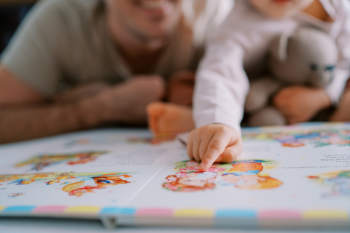
The first few reads of a new book, your toddler mostly listens. By the fifth or sixth read, they start filling in words, pointing at pictures before you turn the page, and guessing what happens next. ZERO TO THREE suggests parents lean into this shift directly once a toddler knows a book well: ask them to guess what a page is about, or invite them to “read” the pictures back to you. This kind of participation is a sign of real comprehension, not a sign your child is bored with the book.
Repetition Builds Emotional Security
A familiar story does double duty. It teaches words, and it soothes. A toddler who knows exactly what happens next in a story, and knows the story fits into their nightly routine, gets a small, reliable signal to calm down and settle in. This is part of why the same book at bedtime tends to work better than a rotating stack. A book your toddler already knows by heart removes the small stress of the unknown right before sleep.
What This Means for Story Time at Home
You do not need to fight the repetition or feel guilty about the unread books on the shelf. Work with it instead.
- Read the same book several nights in a row instead of rotating a new title nightly
- Read at a consistent time, so the story becomes part of the routine that signals bedtime
- Let your toddler fill in a repeated line or word once they know it by heart
- Point to a different detail on the page each night, even in a familiar story
- Avoid rushing through a page your toddler wants to linger on. That pause is part of how they process the story
- Keep a small rotation of two or three favorites, so repetition stays fresh without losing its comfort
Personalized books add another layer to this effect. When your toddler’s own name repeats through the pages night after night, each reading reinforces two things at once, the story and their own identity within it. This repetition also builds the name recognition skills toddlers rely on before they read independently. Read more in our article on name recognition skills.
When to Introduce Something New
Repetition serves a purpose, but it is not the only ingredient in early learning. Balance matters. Watch for signs your toddler is ready to add new material alongside old favorites:
- They recite lines before you read them aloud
- Their attention drifts partway through a book they used to sit through fully
- They ask questions that reach beyond the story on the page
- They point to new books on the shelf without prompting
None of these signs mean drop the old favorite. Add a new book alongside it and let your toddler set the pace between the two.
When Repetition Signals Something More
Toddlers who love repeated books, songs, and routines show a normal, well-documented pattern. Watch for the difference between this pattern and rigid insistence on sameness paired with distress at any change, difficulty with transitions across many parts of the day, or loss of previously gained skills. If you notice these patterns together, bring them up with your pediatrician. A steady preference for a favorite book at bedtime is not a red flag on its own.
What This Means for Your Bedtime Routine
Your toddler asking for the fifteenth reread of a favorite book works exactly as their brain intends. Repetition wires connections, lowers stress through familiarity, and lets a story teach something new on every pass. Lean into the request instead of resisting it. For more on building this into a full wind-down sequence, see our 15-minute bedtime routine guide, and if you’re wondering whether the same book every single night is too much repetition, our piece on reading the same bedtime book every night covers that question directly.
Frequently Asked Questions
Is it bad if my toddler refuses new books entirely?
Not on its own. Let the signs above guide you rather than a calendar. Most toddlers cycle back to wanting something new once a favorite has run its course.
How many times will my toddler ask to reread a book?
There’s no fixed number. Some toddlers settle into a favorite for a few nights, others for weeks. What matters more is whether they’re engaging more each time, filling in words, pointing, asking questions, not just sitting through it.
Does repetition work the same way with screens as with books?
The research on repeated television viewing shows a similar comprehension benefit, but it doesn’t address the physical closeness, back-and-forth talk, and vocabulary gains specific to shared reading. Books and screens aren’t interchangeable here.
Sources
- Charles Nelson, quoted in NPR, Repetitive Play May Tire Parents but Toddlers’ Brains Grow Through Repetition (2024)
- ZERO TO THREE, Why 0-3? Baby Brain Science and Child’s Brain Development
- ZERO TO THREE, How to Introduce Toddlers and Babies to Books
- Horst, Parsons, and Bryan, Get the Story Straight: Contextual Repetition Promotes Word Learning From Storybooks, Frontiers in Psychology (2011)
- Psychology Today, Why Children Like Repetition, and How It Helps Them Learn (2019)