Name Recognition Activities for Toddlers
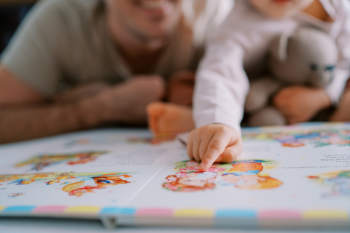
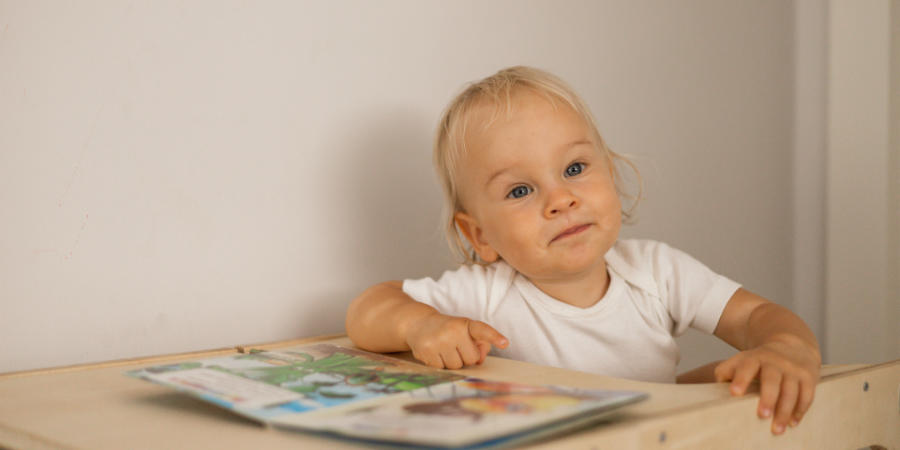
Watch a toddler’s face the moment they hear their own name. Eyes widen. A finger points at the page. A grin spreads across their face. This reaction starts in infancy, and it marks the beginning of a path that runs from recognizing a familiar sound to reading real words.
Written with the assistance of Claude AI and reviewed by the Chilkibo Editorial Team using pediatric literacy research and child development sources
Why Toddlers React to Their Own Name
Researchers Denise Mandel, Peter Jusczyk, and David Pisoni tested 4.5-month-old infants using a head-turn preference procedure. The infants listened longer to their own name than to unfamiliar names with the same stress pattern (Mandel, Jusczyk, & Pisoni, 1995). This preference starts before a baby speaks a single word.
By the toddler years, this early preference grows into full recognition. Most 2-year-olds spot their name across a room before they read another word. Their name is familiar, repeated daily, and tied directly to their sense of self.
This is also why a story built around your child’s name tends to hold their attention longer than a generic one. A toddler’s attention competes with everything else in the room, toys, siblings, the dog walking past, and hearing or seeing their own name pulls focus back to the page. For more on what keeps toddlers engaged during story time, see our guide on toddler attention span and personalized stories.
From Hearing Your Name to Reading Your Name
Researchers Rebecca Treiman and Virginia Broderick studied how young children learn the letters in their own names. Their study, published in the Journal of Experimental Child Psychology, found that preschoolers know more about the letters in their own name than about letters in general, with the strongest advantage for the first letter (Treiman & Broderick, 1998). This advantage showed up in knowing the letter’s name, not yet in knowing the sound it makes.
This explains a pattern many parents notice. A child recognizes their whole name as a shape before they can name a single letter in isolation. Then, gradually, they start picking out the first letter by name. If your child’s name is Michael, they will likely learn that “M” is a letter in their name well before they connect it to a sound or sort out the rest of the alphabet. You can build on this directly. Point out the first letter of your child’s name wherever you see it. “Milk starts with the same letter as Michael.”
A Realistic Timeline
Every child develops at a different pace, so treat the following as a general guide rather than a checklist.
Around 2 to 3 years, most children say their name when asked, according to communication milestones published by the American Speech-Language-Hearing Association (ASHA, 2023). Many toddlers also start to recognize the shape of their written name around this age, though this depends more on exposure to their name in print than it does on speech development.
Between 3 and 5 years, children build on that foundation by learning the individual letters inside their name, starting with the first letter (Treiman & Broderick, 1998).
By 4 to 5 years, most children recognize and name 10 or more letters and can write their own name (ASHA, 2023).
These ranges cover most children, but a wide range still counts as normal. A child who reaches a milestone at the later end of a range is not behind.
Building Name Recognition at Home
You do not need special materials to support this stage. A few simple habits go a long way.
- Label your child’s space. Put their name on their door, cubby, or favorite toy bin.
- Say your child’s name with excitement when it appears in a book, and pause to let them react.
- Point out the first letter of their name when it shows up elsewhere, in a word, a sign, or a book.
- Trace the name together in sand, shaving cream, or with a finger on a foggy window.
- Read books where your child’s name repeats throughout the story, and connect the story to a real memory, like a family trip or a favorite pet.
- Keep it playful. If your child loses interest, step back and try again another day.
What This Sets Up
Letter knowledge tied to your child’s own name is one of the clearest paths into reading. Once your child recognizes a few letters and sounds from their name, that same skill starts showing up when they look at other words, on cereal boxes, street signs, or the pages of a book. For a look at what reading looks like at the next stage, see our post on whether a 2-year-old can learn to read.
Sources
- Mandel, D. R., Jusczyk, P. W., & Pisoni, D. B. (1995). Infants’ recognition of the sound patterns of their own names. Psychological Science, 6(5), 314-317.
- Treiman, R., & Broderick, V. (1998). What’s in a name: Children’s knowledge about the letters in their own names. Journal of Experimental Child Psychology, 70(2), 97-116.
- American Speech-Language-Hearing Association. (2023). ASHA announces new developmental milestones for children ages birth to 5. Retrieved from asha.org/public/developmental-milestones