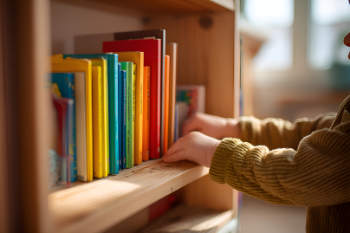
Why Toddlers Lose Interest in Books: 7 Ways to Make Story Time More Engaging
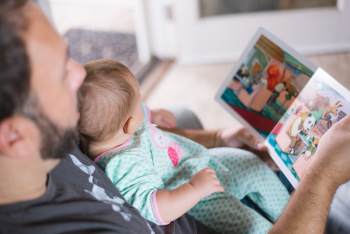
“My toddler won’t sit still when I read.” Many parents experience this. A child might listen to two pages, turn the book around, point at something across the room, or walk away before the story ends.
This does not necessarily mean your toddler dislikes books or has a problem with attention.
Young children are still developing the ability to direct and maintain their attention. They also learn through movement, exploration, repetition, and interaction. Sitting quietly while someone reads an entire story is not always what they are ready to do.
The goal of reading with a toddler is not to keep them in one place for a certain number of minutes. It is to create positive experiences with books, pictures, words, and conversation.
Here are seven practical ways to make story time more engaging, including what research tells us about personalized books.

Written with AI assistance and reviewed by the Chilkibo Editorial Team against pediatric literacy and child development sources.
How Long Can Toddlers Pay Attention to a Book?
There is no reliable universal attention-span formula that tells parents exactly how many minutes a child should spend reading at each age.
A toddler’s interest depends on several factors:
- Development: Younger children are still learning to direct their attention and follow activities.
- Interest: Familiar animals, recognizable objects, and favorite characters can make a book more appealing.
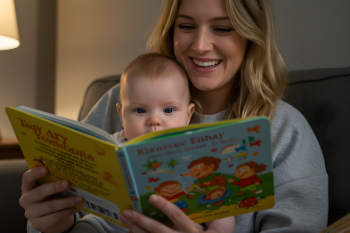
- Interaction: Pointing, naming pictures, making sounds, and answering simple questions give children an active role.
- Timing: Hunger, tiredness, and overstimulation can make reading less enjoyable.
- Familiarity: Repeated exposure to a favorite book can make it easier for a child to anticipate what happens next.
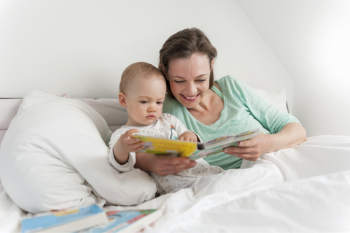
A few minutes of shared reading can be valuable. You do not need to finish every page or read the entire story in one sitting.
ZERO TO THREE recommends allowing babies and toddlers to determine how much of a book they want to explore. Following a child’s interest is more important than completing the story.
The important distinction is between sitting still and participating. A toddler who points at pictures, makes animal sounds, or turns pages is actively engaging with a book, even when they are not sitting quietly.
7 Ways to Keep Toddlers Interested in Reading
1. Let Your Toddler Choose the Book
Children are more likely to participate when they have some control over the activity.
Offer two or three age-appropriate books and let your toddler choose. One day they might prefer animals. Another day they might want a familiar bedtime story.
Do not worry if they repeatedly choose the same book. Repetition gives children opportunities to recognize pictures, anticipate familiar words, and participate in predictable parts of a story.
You can also let your child choose which book to read first or which page to revisit.
2. Make Reading Interactive
Instead of reading every sentence without interruption, give your toddler opportunities to participate.
Point to an illustration and ask a simple question:
- “Where is the elephant?”
- “What color is the bird?”
- “Can you find the little monkey?”
- “What sound does the lion make?”
For younger toddlers, pointing and looking are meaningful responses. They do not need to answer every question verbally.
You can also respond to what your child notices. If they point at a giraffe, talk about its long neck or the spots on its body.
This approach is related to dialogic reading, an established shared-reading technique that encourages children to become active participants rather than simply listening.
The American Academy of Pediatrics describes techniques such as prompting children, responding to their answers, expanding on what they say, and connecting story content to their experiences.
3. Use Animal Sounds, Repetition, and Familiar Words
Young children often enjoy books with predictable language and repeated sounds.
When reading about animals, make the sounds together:
- “The cow says moo!”
- “The duck says quack!”
- “The lion gives a big roar!”
Pause before a familiar sound and give your toddler a chance to complete it.
Repetition also helps children anticipate what comes next. If a phrase appears several times in a story, your child may eventually begin saying it along with you.
You do not need complicated activities. Simple repetition and playful conversation can make reading more enjoyable.
4. Connect the Story to Your Child’s Everyday Life
Children understand new ideas more easily when they can connect them with familiar experiences.
If a book shows a dog, talk about a dog your child has seen. If the story features a baby animal, compare it with a picture of a familiar animal.
Try questions such as:
- “Have you seen a dog like this?”
- “Who has a teddy bear like the one in the picture?”
- “Do you remember visiting the farm?”
These connections make the story part of a larger conversation.
They also provide opportunities to introduce new words and talk about experiences outside the book.
5. Choose Books With Engaging Illustrations
Pictures are an important part of early shared reading.
A toddler might be more interested in looking at a colorful animal illustration than listening to a long explanation about it.
Look for books with:
- Clear, recognizable illustrations.
- Familiar objects, animals, and everyday situations.
- Short, age-appropriate text.
- Pictures that give you something to talk about.
- Enough variety to encourage exploration without overwhelming the page.
A good picture book does not need complicated language or a long storyline to create an enjoyable reading experience.
Sometimes one interesting illustration can lead to several minutes of pointing, naming, and conversation.
6. Try a Personalized Book Featuring Your Child
One way to make a story feel more personally relevant is to include your child’s name in the book.
Personalized books can give children an opportunity to recognize themselves as part of the story rather than simply following an unfamiliar character.
There is some academic research supporting this idea.
In a 2013 study published in the Journal of Early Childhood Literacy, Natalia Kucirkova, David Messer, and Denise Whitelock observed seven parents reading with their children, aged 12 to 33 months.
The researchers compared personalized books, comparable non-personalized books, and each child’s favorite book.
Children showed more smiles and laughter during personalized reading than during non-personalized reading. They also showed more vocal activity with personalized books than with their favorite books.
The findings suggest that personalization can encourage positive emotional engagement during shared reading.
Another study, published in 2014, examined spontaneous speech during personalized and non-personalized book reading. It involved 35 children with an average age of approximately three years.
Children produced more spontaneous speech and more self-referencing language, such as references to themselves, during personalized sections.
A separate 2014 experiment involving 18 preschool children also found better acquisition of certain unfamiliar words presented in personalized sections of a book.
However, these findings need to be interpreted carefully. The studies involved relatively small groups, and they do not prove that personalized books increase every child’s attention span or produce better results than all traditional books.
Personalization is best understood as one way to make shared reading more personally relevant and encourage conversation.
For example, Chilkibo Publishing creates personalized animal storybooks for toddlers aged 0–3. Your child’s name appears throughout the story, alongside animal illustrations, short text, and interactive questions.
This gives parents opportunities to connect the pictures and story with their child’s own identity.
You can explore the personalized books for toddlers at Chilkibo Publishing.
7. Stop Before Your Child Becomes Frustrated
One of the most useful reading habits is knowing when to stop.
If your toddler starts losing interest, try changing the activity:
- Skip to a page with a favorite illustration.
- Let your child turn the pages.
- Talk about one picture instead of reading the text.
- Close the book and return to it later.
There is no need to insist on finishing the story.
You can also experiment with different reading times. Some children enjoy books after breakfast, while others prefer a quiet moment before bedtime.
Pay attention to your child’s reactions and find a routine that works for your family.
What Type of Book Is Best for an Easily Distracted Toddler?
Not every toddler responds to the same type of book. The best choice depends on the child’s interests, developmental stage, and preferred way of interacting with pictures and stories.
Here is a practical comparison:
| Book type | What it offers | Best opportunities |
|---|---|---|
| Picture books | Recognizable illustrations and simple stories | Naming, pointing, and describing |
| Interactive books | Questions, flaps, textures, or activities | Exploration and participation |
| Personalized books | Familiar names and personal references | Self-recognition and conversation |
| Wordless books | Pictures without a fixed written story | Storytelling and imagination |
| Repetitive books | Familiar phrases and predictable language | Repetition and anticipation |
These categories can overlap. A personalized book, for example, can also be an interactive picture book.
Rather than looking for one universally best format, consider what makes your child want to look, listen, point, talk, and return to a book.
What Does Research Say About Interactive Reading?
Personalization is only one part of the picture. Research on shared reading provides a broader explanation of why the way parents read matters.
A 2019 systematic review and meta-analysis examined 19 randomized controlled trials involving 2,594 children aged 1–6.
The researchers found small positive effects of shared-reading interventions on children’s expressive and receptive language skills. They also found a larger effect on caregivers’ book-sharing skills.
This is an important distinction. Helping parents read more interactively can improve the quality of the reading experience, even though improvements in children’s language skills are not guaranteed after every intervention.
The American Academy of Pediatrics also emphasizes the importance of interactive reading, describing how shared books provide opportunities for language development, emotional connection, and positive parent-child relationships.
Together, this research supports a practical conclusion: the conversation between parent and child matters just as much as the pages of the book.
Does Personalization Automatically Make Children More Engaged?
No. A personalized book is not a guaranteed solution for every child.
A 2021 study by Ellen Kruse, Isabelle Faller, and Kirsten Read examined whether personalized storybooks about sharing could improve preschool children’s understanding of a moral lesson and their actual sharing behavior.
The researchers did not find that nominal personalization produced greater comprehension or more sharing behavior than the comparison conditions.
This is an important limitation to acknowledge.
A child’s name appearing in a story does not automatically mean they will understand its message, learn every new word, or stay interested until the final page.
The quality of the story, illustrations, reading interaction, and the child’s own interests all matter.
Personalization can create another opportunity for connection, but it works best as part of an enjoyable shared-reading experience.
How to Tell Whether Your Toddler Is Engaged During Reading
Do not measure success only by how long your child remains seated.
Look for other signs of participation:
| Engagement signal | What it might look like |
|---|---|
| Visual attention | Looking at illustrations or following your pointing |
| Physical interaction | Touching pictures or turning pages |
| Vocal participation | Making sounds, repeating words, or naming objects |
| Emotional response | Smiling, laughing, or showing excitement |
| Anticipation | Recognizing familiar phrases or predicting what comes next |
| Personal connection | Relating a character, object, or event to their own experiences |
These are practical observations, not a diagnostic checklist or a formal measure of attention.
A child does not need to demonstrate every behavior. Even brief moments of shared attention and enjoyment are worthwhile.
Frequently Asked Questions
Why does my toddler lose interest in books so quickly?
Toddlers are still developing their ability to direct and maintain attention. They may also prefer exploring pictures, moving around, and interacting with their surroundings rather than listening to a complete story. Try shorter reading sessions, familiar books, and more opportunities for participation.
Should I force my toddler to finish a book?
No. Finishing every page is not necessary. If your child loses interest, skip to a favorite page, talk about an illustration, or return to the book later. Keeping reading enjoyable is more important than completing a story.
Are personalized books good for toddlers?
Personalized books can make stories more personally relevant by including a child’s name and other familiar details. Small research studies suggest potential benefits for positive emotional engagement, spontaneous speech, and certain aspects of word learning. However, personalization does not guarantee longer attention or better learning for every child.
How can I make bedtime reading more interesting?
Choose a short book with engaging pictures and familiar subjects. Let your toddler choose the story, point at illustrations, and answer simple questions. Keep the experience relaxed and avoid turning bedtime reading into a task that must be completed.
What if my toddler prefers looking at pictures instead of listening?
That is perfectly fine. Talk about the illustrations, name objects, describe colors, and let your child point to interesting details. Reading together does not always need to follow the written text.
Make Story Time an Enjoyable Part of Your Day
A toddler who moves around, skips pages, or loses interest before a story ends is not necessarily a child who dislikes reading.
The most important thing is to build positive experiences with books from an early age.
Give your child opportunities to choose, explore, point, make sounds, and participate. Try different types of books and pay attention to what captures their interest.
Personalized books can add another dimension by making the child part of the story. But whether you choose a traditional picture book, an interactive story, or a personalized book, the shared experience is what matters most.
A few enjoyable minutes of reading together are better than a long reading session that feels like a struggle.
Sources and Further Reading
- American Academy of Pediatrics (2024). Literacy Promotion: An Essential Component of Primary Care Pediatric Practice: Technical Report. Pediatrics, 154(6).
- Dowdall, N., et al. (2019). Shared Picture Book Reading Interventions for Child Language Development: A Systematic Review and Meta-Analysis. Child Development, 91(2), e383–e399.
- Kucirkova, N., Messer, D., and Whitelock, D. (2013). Parents Reading with Their Toddlers: The Role of Personalization in Book Engagement. Journal of Early Childhood Literacy, 13(4), 445–470.
- Kucirkova, N., Messer, D., and Sheehy, K. (2014). The Effects of Personalisation on Young Children’s Spontaneous Speech During Shared Book Reading. Journal of Pragmatics, 71, 45–55.
- Kucirkova, N., Messer, D., and Sheehy, K. (2014). Reading Personalized Books with Preschool Children Enhances Their Word Acquisition. First Language, 34(3), 227–243.
- Kruse, E., Faller, I., and Read, K. (2021). Can Reading Personalized Storybooks to Children Increase Their Prosocial Behavior?. Early Childhood Education Journal, 49, 273–282.
- ZERO TO THREE (2025). How to Introduce Toddlers and Babies to Books.