Busy Mom’s Guide to Daily Reading Time with Toddlers
Finding time to read with your toddler feels hard some days. Diaper changes, meal prep, tantrums, and cleanup fill your schedule fast. Daily reading time does not have to become one more task on an already full list. A few small shifts help you fit reading into busy days without adding pressure.
Written with the assistance of Claude AI and reviewed by the Chilkibo Editorial Team using pediatric literacy research and child development sources

Why Daily Reading Matters
Reading habits among older kids and teens have dropped over the past two decades. In the UK, daily reading among 8 to 18 year olds fell to a 20-year low of 18.7% in 2025, then rose to 20.3% in early 2026, the first uptick in five years. These numbers cover school-age kids and teens, not toddlers, but the trend points to why the habit you build now matters. Reading routines formed in the first few years tend to stick.
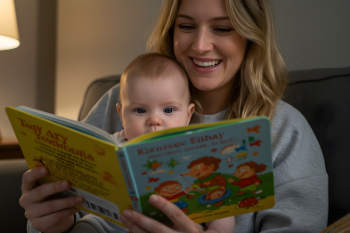
Reading with your toddler supports language development, literacy, empathy, and emotional skills. It helps children learn to name and manage big feelings. Even before a baby talks, reading builds neural pathways tied to language, and the sensory part, your voice, your lap, the feel of the pages, matters as much as the words on the page.
A 2023 Cambridge University study followed more than 10,000 kids and found the strongest cognitive and brain-structure benefits among those who read for pleasure between ages 2 and 9, with gains topping out around 12 hours a week. This number describes a research finding across childhood, not a daily target for a toddler. Starting the habit early is what counts. A separate study of more than 4,700 families found regular book time with 2 and 3 year olds predicted stronger reading, writing, grammar, and math scores in grade 3 and grade 5, with the strongest effect among children from lower-income households.
Reading Does Not Need to Look a Certain Way
Drop the image of a spotless living room with a matching outfit and a hardcover book. Real reading time is messier.
It might happen while your toddler eats breakfast and you drink cold coffee. It might happen in the car, waiting for an older sibling’s practice to end. It might happen at 2 a.m., when sleep will not come for either of you. Any of these count. Waiting for a perfect moment means missing a lot of good ones.
Strategy 1: Build Reading Pockets Into Your Day
Skip the idea of one long reading session. Look instead for small pockets of time already built into your day.
- Morning coffee: hand your toddler a short board book while the coffee brews.
- Transitions: read on the stairs on the way to nap time, or read a short book between playtime and snack.
- Waiting periods: keep a small book in your diaper bag for the doctor’s office, the grocery line, or school pickup.
- Meal prep: a sturdy board book buys you a few extra minutes to finish chopping vegetables.
Strategy 2: Attach Reading to Routines You Already Have
Reading sticks best when it rides along with something you already do daily.
- Bath time: waterproof books extend bath time and add a few contained minutes.
- Mealtime: a wipeable board book at the table keeps an 18-month-old seated long enough to eat. Skip the concern over table manners at this age.
- Car rides: read aloud while someone else drives, or read a few pages at red lights.
- Cleanup time: hand your toddler a book to look at while you tidy the room. They stay engaged nearby.
Strategy 3: Let Your Toddler Lead
Toddlers do not sit still and listen quietly. This is normal. Work with their instinct to touch, point, and make noise instead of against it.
- Let your toddler pick the book, even the same one for the fifteenth time. Repetition builds language skills.
- Add sounds, voices, and textures. This keeps attention and helps comprehension.
- Treat interruptions as part of reading, not a break from it.
- Skip word-for-word reading sometimes. Pictures alone spark good conversations about colors, animals, and feelings.
Strategy 4: Place Books Where Your Toddler Will Find Them
Set up your space so reading becomes the easy choice.
- Keep books in every room your toddler spends time in, plus the car and the diaper bag.
- Rotate a small, visible set of books weekly instead of leaving out every book you own. Fewer choices means less overwhelm.
- Match the book to the moment: calm books for bedtime, more energetic ones for daytime.
- Choose board books and cloth books sturdy enough for a toddler to handle without supervision. Durable pages hold up to grabbing and chewing, and you won’t stress over damage. Our guide to board book ages covers which stage gets the most out of them.
Strategy 5: Lower the Bar
Some of the best reading time happens once you stop aiming for perfect.
- Two pages count. You do not need to finish a book to call it reading time.
- Pictures alone tell a story worth talking about.
- Repeat requests are a sign of learning, not boredom.
- Movement is fine. A toddler doing somersaults during a story is still listening.
When Reading Feels Hard
My toddler will not sit still. This is typical. Read while they play nearby, or pick books built around movement and action.
We are always rushed. Keep a stack of five-page books on hand for chaotic days. Even thirty seconds of reading keeps the routine alive.
I am too tired to sound excited. You do not need to perform. Quiet, calm reading works fine too. For more on tone and pacing, see our guide on how to read aloud to toddlers.
My toddler tears the books. Choose tougher board books, or set aside a few titles as special books you handle together.
Make It a Routine, Not a Project
Pick one time of day to start: while coffee cools, or right before snack time. Once this sticks, add a second pocket of time. You are not recreating a library story hour. You are building a habit which fits your household. If you are also working on a wind-down routine, our 15-minute bedtime plan pairs well with an evening reading pocket.
The Bottom Line
Daily reading time with your toddler does not require a spotless house or an open schedule. It takes small windows of time, repeated often. A two-minute session while dinner cooks counts as much as a longer bedtime story. Consistency beats a perfect performance every time.
Your toddler will not remember whether the session ran five minutes or fifty. They will remember your voice, your lap, and knowing books matter. It adds up to something real.
Sources
ScienceDirect study: https://www.sciencedirect.com/science/article/pii/S0885200621001125
National Literacy Trust (2025 report): https://literacytrust.org.uk/research-services/research-reports/children-and-young-peoples-reading-in-2025/
National Literacy Trust (2026 update, 20.3% figure): https://literacytrust.org.uk/news/our-latest-research-shows-modest-rise-in-childrens-reading-engagement-but-levels-remain-low/
Child Mind Institute: https://childmind.org/article/why-is-it-important-to-read-to-your-child/
Cambridge University (Sahakian et al., Psychological Medicine 2023): https://www.cam.ac.uk/research/news/reading-for-pleasure-early-in-childhood-linked-to-better-cognitive-performance-and-mental-wellbeing