
Travel Books for Toddlers: Comfort Items That Actually Work
Anyone who’s attempted to travel with a toddler knows the unique brand of chaos that can ensue. One minute your little one is happily munching on snacks, and the next they’re having a complete meltdown because their favorite stuffed animal is “sitting wrong” or they suddenly decided they don’t like the color of their juice cup. Travel days can turn even the most patient parent into a frazzled mess, desperately searching for anything that might restore peace to the journey.
Here’s where many parents make a crucial mistake: they pack bags full of toys, electronic devices, and snacks, hoping to keep their toddler entertained. While these items have their place, there’s one comfort item that consistently outperforms all others when it comes to travel: books. Not just any books, but specifically chosen travel books that serve as genuine comfort items for your little one.
The difference between a successful travel day and a disaster often comes down to having the right comfort strategies in place. And after years of research and countless parent testimonials, travel books have emerged as the unsung heroes of family travel.
Why Traditional Travel “Solutions” Often Fail
Before we dive into why books work so well, let’s talk about why many common travel solutions fall short. Most parents rely on what I call the “entertainment approach” – packing bags full of activities designed to keep toddlers busy. The problem is that entertainment and comfort are two very different things.
Electronic devices might provide temporary distraction, but they often create more problems than they solve. Screen time can be overstimulating, especially in the already overwhelming environment of travel. Recent studies have shown that excessive screen time can actually increase tantrum behavior in toddlers, making your travel day even more challenging.
New toys seem like a logical choice, but they often backfire. In the stress of travel, toddlers crave familiarity, not novelty. That brand-new toy that seemed so exciting at the store might actually increase anxiety because it’s unfamiliar when everything else already feels different and scary.
Snacks are essential, but they’re not comfort items. They solve hunger but don’t address the emotional needs that arise during travel. Plus, too many snacks can lead to sugar crashes, upset stomachs, and more behavioral challenges.
Traditional comfort items like stuffed animals and blankets are great, but they’re often bulky, easy to lose, and don’t provide the structured engagement that can help a toddler through a long journey.
The Psychology of Travel Stress in Toddlers
To understand why books work so well as travel comfort items, we need to understand what’s happening in a toddler’s mind during travel. For adults, travel might be exciting or routine, but for toddlers, it’s often overwhelming and confusing.
Think about it from their perspective: they’re in unfamiliar spaces, following disrupted routines, surrounded by strange noises and smells, and often separated from their usual comfort items. Their little nervous systems are on high alert, trying to process all this new information while also dealing with the physical discomfort of sitting still for long periods.
In this state of overwhelm, what toddlers need most is something that provides:
- Familiarity and predictability
- Calm, soothing input
- A way to co-regulate with their caregiver
- Structure and routine
- Positive distraction from stressors
Books check all these boxes in ways that other comfort items simply can’t.
How Books Provide Unique Comfort During Travel
Familiar Voices and Routines: When you read to your toddler during travel, you’re providing the familiar sound of your voice in an unfamiliar environment. This creates what psychologists call “portable routine” – a way to bring the comfort of home with you wherever you go.
Sensory Regulation: The quiet, focused activity of reading helps regulate an overstimulated nervous system. Unlike the flashy lights and sounds of electronic toys, books provide gentle, calming sensory input that helps toddlers feel more grounded.
Predictable Structure: Stories have a beginning, middle, and end. This predictable structure is incredibly comforting to toddlers, who thrive on knowing what comes next. Even if everything else about their environment is unpredictable, the story structure remains constant.
Shared Attention: Reading together requires shared attention between parent and child. This connection helps toddlers feel secure and supported, even in stressful situations.
Emotional Processing: Travel can bring up big emotions for toddlers – excitement, fear, confusion, frustration. Books provide a safe way to process these emotions, especially if you choose stories that address travel, new experiences, or managing difficult feelings.
Choosing the Right Travel Books
Not all books make good travel companions. The key is selecting books that are specifically suited to the unique challenges of travel. Here’s what to look for:
Size and Portability: Obviously, you want books that are easy to pack and carry. Board books are often ideal because they’re compact and durable. Avoid large picture books or books with lots of loose parts that can get lost.
Familiar Favorites: This is not the time to introduce new books. Pack books your toddler already knows and loves. The familiarity will be comforting in an unfamiliar environment.
Calming Content: Choose books with soothing themes and gentle illustrations. Avoid overly stimulating books or stories with scary or intense content. Look for books about travel, adventure, or comforting daily routines.
Interactive Elements: Books with simple interactive elements – like lift-the-flap books or touch-and-feel books – can help engage restless little hands without being overstimulating.
Emotional Themes: Books that address feelings, coping strategies, or new experiences can be particularly helpful during travel. They give you natural opportunities to talk about what your toddler might be experiencing.
Understanding what makes a good children’s book can help you make better selections for your travel collection.
Building Your Travel Book Collection
Creating a collection of go-to travel books is one of the smartest investments you can make as a traveling parent. Here are some categories to consider:
Travel and Adventure Books: Stories about characters going on trips, riding in cars, trains, or planes, or exploring new places. These help normalize the travel experience and can reduce anxiety about the unknown.
Comfort and Routine Books: Books about bedtime routines, daily activities, or familiar experiences. These provide emotional stability when everything else feels disrupted.
Emotion and Coping Books: Stories that help toddlers understand and manage their feelings. These are invaluable when meltdowns occur or when your little one is feeling overwhelmed.
Sensory and Interactive Books: Books with different textures, sounds, or interactive elements that can engage multiple senses and help with self-regulation.
Personalized Books: If you have them, personalized books where your child is the main character can be especially comforting during travel. Seeing themselves in the story provides extra security and connection.
Practical Strategies for Using Books During Travel
Having the right books is only half the battle. Here’s how to use them effectively:
Create a Travel Book Routine: Establish specific times during travel when you’ll read together. This might be at takeoff and landing, during rest stops, or whenever you notice your toddler getting restless.
Use Books Preventatively: Don’t wait until your toddler is already melting down to break out the books. Start reading when you notice early signs of stress or overwhelm.
Make It Special: Pack books in a special travel bag or container that your toddler can help carry. This gives them some control and makes the books feel extra special.
Engage Other Senses: While reading, you might also incorporate gentle massage, rocking, or quiet singing. This multi-sensory approach can be especially effective for anxious toddlers.
Be Flexible: If your toddler isn’t interested in a particular book, don’t force it. Have several options available and let them choose what feels right in the moment.
Different Types of Travel, Different Book Strategies
Car Travel: Long car rides present unique challenges and opportunities. Audio books can be wonderful for car travel, allowing toddlers to listen to stories while looking out the window. However, don’t underestimate the power of physical books during stops. Pack a few favorites in an easily accessible bag for rest stops, meal breaks, or when you need to pull over for a meltdown moment.
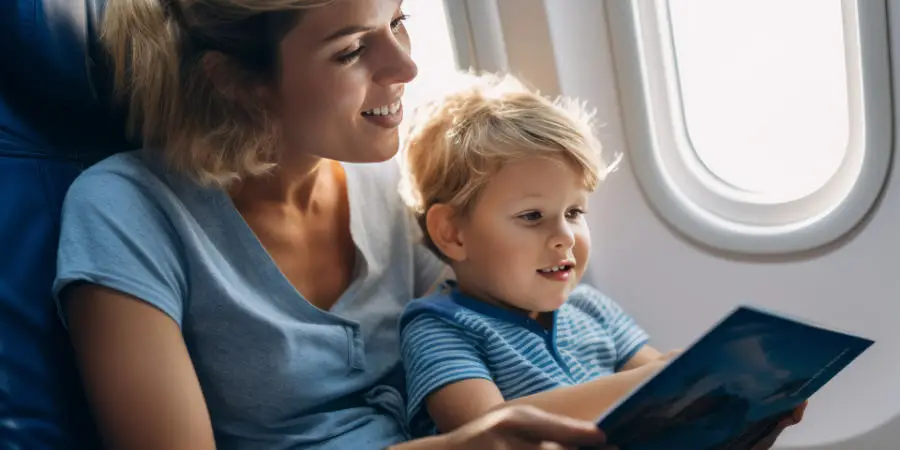
Air Travel: Airlines restrictions mean you need to be strategic about book selection. Choose lightweight board books or paperbacks. Books with minimal loose parts are essential – you don’t want to be crawling under airplane seats looking for puzzle pieces. Consider books about flying or airplanes to help normalize the experience.
Hotel Stays: Unfamiliar sleeping environments can be challenging for toddlers. Bring bedtime books to maintain familiar routines. Having the same bedtime story in a new place can provide crucial comfort and help with sleep transitions.
Long-Distance Travel: For extended trips, consider rotating books. Pack some favorites but also bring a few “new-to-them” books that you can introduce gradually. This prevents boredom while still providing the comfort of familiar stories.
The Science Behind Books as Comfort Items
Research in child development has consistently shown that books provide unique benefits during stressful situations. Studies indicate that reading together activates the parasympathetic nervous system, promoting relaxation and emotional regulation. This is particularly important during travel when toddlers’ stress responses are often heightened.
The predictable rhythm of reading aloud also helps regulate breathing and heart rate, both for the child and the parent. This biological synchronization creates a calming effect that can be particularly powerful in the chaotic environment of travel.
Additionally, research shows that familiar stories provide what psychologists call “cognitive scaffolding” – a mental framework that helps children process new experiences. When toddlers hear familiar stories in unfamiliar environments, they’re better able to cope with the stress of new situations.
Real-World Success Stories
Parent testimonials consistently highlight the effectiveness of books as travel comfort items. Sarah, a mother of two, shares: “I used to pack a huge bag of toys for every trip, but they never seemed to help when my daughter was really upset. Now I pack three of her favorite books and it’s like magic. She calms down immediately when we start reading.”
Another parent, Marcus, discovered the power of books during a particularly challenging flight: “My son was having a complete meltdown during turbulence. Nothing was working – not snacks, not his tablet, not his favorite toy. Finally, I pulled out his favorite bedtime book and started reading. Within minutes, he was calm and eventually fell asleep in my arms.”
These stories aren’t unusual. Travel books work because they address the underlying emotional needs that arise during travel, not just the surface-level need for entertainment.
Creating Positive Travel Associations
One of the most powerful aspects of using books as travel comfort items is that they help create positive associations with travel itself. When toddlers consistently have positive, calming experiences with books during trips, they begin to associate travel with comfort and security rather than stress and chaos.
This is particularly important for families who travel frequently. Children who have positive travel experiences are more likely to be flexible, adaptable, and resilient as they grow older. Books play a crucial role in creating these positive associations.
Beyond the Toddler Years
The benefits of travel books extend well beyond the toddler years. Children who learn to find comfort in books during travel often become more independent and confident travelers as they grow older. They develop self-regulation skills that serve them well in many situations beyond travel.
Many parents report that their children continue to pack books for trips well into elementary school and beyond. What starts as a comfort strategy becomes a lifelong habit of finding solace and entertainment in reading.
Addressing Common Concerns
“My toddler won’t sit still for books during travel”: This is completely normal. Start with very short books or even just looking at pictures together. The goal isn’t to read cover to cover but to provide comfort and connection.
“Books get damaged during travel”: Choose sturdy board books for travel, and consider keeping a few “travel only” books that you don’t mind getting worn. The benefits far outweigh the risk of damage.
“My toddler prefers screens”: This is increasingly common, but it’s worth persisting with books. You might start by combining approaches – perhaps an audio book while looking at pictures, or using book-based apps that maintain some of the benefits of traditional books.
“We don’t have space for books”: Even one or two small books can make a significant difference. Consider very small board books or even laminated picture cards that tell simple stories.
Building Travel Confidence
One of the most significant long-term benefits of using books as travel comfort items is the confidence they help build. When toddlers have reliable coping strategies for travel stress, they develop a sense of mastery and control that extends to other challenging situations.
This confidence building happens gradually. Each time a book helps calm a travel meltdown or provides comfort in an unfamiliar place, your toddler learns that they have tools for managing difficult situations. This lesson becomes internalized and shapes their approach to challenges throughout their lives.
The Environmental Factor
In our increasingly eco-conscious world, books also offer environmental advantages over many traditional travel entertainment options. They don’t require batteries, don’t create electronic waste, and can be shared, donated, or passed down to other families when outgrown.
Quality books also tend to last much longer than most travel toys, making them a more sustainable choice for families who travel frequently.
Making Books Part of Your Travel Routine
The key to success with travel books is consistency. Make reading a standard part of your travel routine, just like packing snacks or remembering car seats. Here are some practical tips:
Pre-Trip Preparation: In the days leading up to a trip, read your chosen travel books at home. This helps reinforce the comfort association and prepares your toddler for the upcoming journey.
Pack Smart: Keep travel books in an easily accessible bag or container. You don’t want to be digging through luggage when you need them most.
Set Expectations: Let your toddler help choose which books to pack. This gives them some control and investment in the process.
Be Consistent: Use books at similar times during each trip – perhaps always starting with a book when you get in the car, or having a special “airplane book” that only comes out during flights.
The Ripple Effect
The benefits of using books as travel comfort items extend beyond just the travel experience itself. Parents often report that their children become more interested in reading overall, develop better emotional regulation skills, and show increased resilience in other challenging situations.
This makes sense from a developmental perspective. When children learn that books can provide comfort and help them cope with stress, they’re more likely to turn to reading in other difficult moments. This creates a positive cycle where reading becomes associated with comfort, security, and problem-solving.
Conclusion: The Simple Solution That Works
In a world full of complicated parenting gadgets and expensive travel accessories, books stand out as a simple, effective solution that actually works. They’re portable, affordable, durable, and provide multiple types of comfort and support that other items simply can’t match.
The next time you’re preparing for a trip with your toddler, consider leaving some of those toys and electronic devices at home. Instead, pack a few carefully chosen books and watch how they transform your travel experience. You might be surprised at how something so simple can make such a profound difference.
Remember, the goal isn’t to eliminate all travel stress – some challenges are inevitable when traveling with young children. The goal is to have reliable tools that help you and your toddler navigate those challenges with more confidence and less chaos.
Books aren’t just entertainment for the journey; they’re comfort items that can turn a potentially stressful experience into an opportunity for connection, calm, and positive memories. And in the end, isn’t that what we all want from our family travel experiences?