Using Story Time to Calm Toddler Tantrums
One minute your toddler plays happily. The next, they scream on the floor over the wrong color cup. This happens to almost every parent of a young child.
Tantrums peak at a predictable age. Research from Potegal and Davidson found tantrums in 87% of children aged 18 to 24 months and 91% of children aged 30 to 36 months. Rates drop to 59% by age four. These numbers show tantrums mark a normal stage of development, not a parenting failure.
Written with the assistance of Claude AI and reviewed by the Chilkibo Editorial Team using pediatric literacy research and child development sources

Why Tantrums Happen
Toddlers understand more language than they speak. This gap between understanding and expression builds frustration fast. A child who wants something specific but lacks the words to ask for it often reacts with crying or screaming instead.
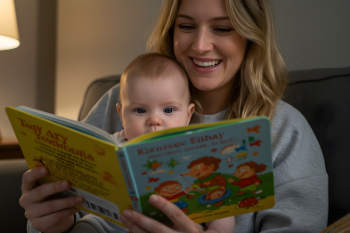
Books give toddlers a structure for big feelings before language catches up. A story slows the moment down and gives both of you something calm to focus on together.
What Reading Does During a Tantrum
Reading aloud in a slow, steady voice gives a toddler something predictable to anchor to. A 2019 study in Frontiers in Neuroscience found reading aloud activates the body’s rest-and-digest response, the same system responsible for slowing heart rate and breathing after stress. The study measured this effect in adults, but the underlying mechanism, a slower breath paired with a steady voice, applies well to how toddlers settle during a parent’s calm reading.
Books built around feelings give children words for what they experience. When a toddler hears a story where a character feels mad, sad, or scared and works through it, the child starts building their own vocabulary for those same feelings.
How to Use Story Time During a Meltdown
Start with your voice, not the book. Say “Once upon a time, there was a little boy who felt upset” before reaching for anything to read. Your voice signals calm before the book does.
Choose books with simple, repeating language. Emotion-focused books work well here. Our post on how animal characters help toddlers learn emotions covers why animal characters connect with toddlers faster than human ones, and that connection makes feelings books land better during a tantrum.
Ask simple questions while reading. “What does the bunny feel right now?” shifts your child’s focus from the meltdown to the story.
Stick to books your toddler already knows. A new book asks too much of a child mid-tantrum. Familiar stories offer comfort and let your toddler predict what comes next, building a sense of control.
Building a Collection for Big Feelings
A few book types work well for emotional moments.
Feelings books name emotions directly. Titles like The Feelings Book by Todd Parr or When Sophie Gets Angry by Molly Bang show a character moving through a strong emotion toward resolution.
Repetitive books build a rhythm helping an overstimulated child settle. Brown Bear, Brown Bear, What Do You See is a common example.
Books about daily routines help when a tantrum connects to a specific event, like a doctor visit or a new sibling.
Setting Up the Right Environment
Move to a quiet spot. Removing your toddler from the trigger matters as much as the book itself.
Keep your voice slow and steady, even if your toddler still cries. Your tone models the state you want your child to reach.
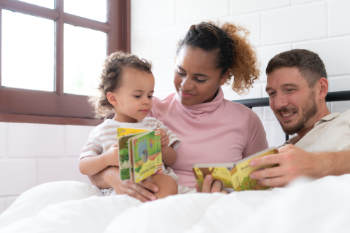
Let your toddler sit on your lap or lean against you if they want to. Physical closeness adds to the calming effect of the story.
When Story Time Does Not Work
Books do not solve every tantrum. Some meltdowns run too hot for a story to reach. If reading falls flat, try a familiar song instead, or sit with your child in silence and let them know you’re there. Presence matters more than any specific tool.
Cutting back on tablet and phone use during emotional moments helps too. A 2024 study in JAMA Pediatrics, led by researcher Caroline Fitzpatrick, found toddlers frequently soothed with screens during outbursts showed more emotional dysregulation months later. Story time gives you a screen-free option, building emotional skills instead of ending the moment without teaching anything.
Reading as Prevention
Regular reading, outside of tantrum moments, builds your child’s emotional vocabulary over time. Before a story, ask “How do you feel right now?” After the story, talk about how the character felt and what they did about it.
If your toddler struggles with a specific situation, like leaving the playground, read about it while they’re calm. Our guide on reading aloud to toddlers covers techniques making these everyday sessions more effective.
Personalized books add another layer here. A story where your child stars as the character facing the big feeling gives the lesson more weight than a story about someone else. Our post on personalized books and emotional growth goes deeper into how this works.
The Long-Term Payoff
Toddlers who learn to use books as a coping tool tend to carry the habit forward. Consistent, calm story time during hard moments builds two things at once: emotional regulation skills and a positive association with reading.
Next time you see a meltdown building, reach for a book you both know well and start with a steady voice. It won’t work every time, but it gives your toddler one more tool for a feeling they don’t yet have words for on their own.
Sources
- StatPearls, Temper Tantrums (citing Potegal & Davidson, tantrum prevalence data)
- Frontiers in Neuroscience (2019), autonomic nervous system activity during reading aloud
- JAMA Pediatrics (2024), Fitzpatrick et al., Early-Childhood Tablet Use and Outbursts of Anger