How to Let Your Toddler Choose Books Without Losing Story Time
Your toddler grabs three board books, drops two, then reaches for a fourth across the room. Story time hasn’t started and five minutes are gone. You want your child to feel some control over what happens next. You also want to read a book before bedtime arrives. Both goals fit together once you understand what actually happens in a toddler’s mind during the choosing part.
Research on toddler choice gives a clear answer, and it isn’t the one most parents expect. Toddlers don’t lose interest when they see a large pile of books. They lose interest in the book they picked, once they’ve sorted through too many options to find it. That difference decides whether your evening turns into a negotiation or a calm five-minute routine.
Written with the assistance of Claude AI and reviewed by the Chilkibo Editorial Team using pediatric literacy research and child development sources
Why Letting Your Toddler Choose Matters
Toddlerhood is the stage where children start asserting themselves and pushing for control over small decisions. Handing over some of that control, on purpose, supports skills your child needs well beyond story time. One study found that offering children choices helps them build a sense of control over their environment, take ownership of their decisions, and manage strong emotions instead of melting down. The same research found that giving toddlers opportunities to choose predicts growth in executive function skills, independent of the child’s age or other parenting behaviors. PubMed CentralPubMed Central
Reading itself carries its own weight here. The American Academy of Pediatrics recommends shared reading starting at birth and continuing at least through the start of kindergarten. A book choice your toddler makes and sticks with builds toward that routine far better than a book you hand over without asking. American Academy of Pediatrics
The Two Book Rule Beats the Whole Shelf
Here’s where most parents get the setup wrong. Offering the entire bookshelf feels generous, but it works against you.
A researcher at Northwestern’s Kellogg School studied this directly using Curious George books and colored building blocks with preschoolers. Children who picked between two Curious George titles spent less time reaching a decision and more time actually looking at the book afterward, compared to children who chose from seven titles. A separate test with building blocks found children who picked from a set of two played with the blocks twice as long as children who picked from a set of six. north western
The pattern holds a simple lesson. A toddler who works through fewer options has more attention left over for the book itself. A toddler who works through many options spends that attention on deciding, and has less left for the story.
Before you offer a choice, pull two or three books yourself. Don’t hand over the whole shelf and ask your toddler to narrow it down.
Why Toddlers Don’t Mind a Big Pile, and It Still Backfires
A separate study complicates the picture in a useful way. Researchers tested toddlers around two and a half years old with a sticker book task offering anywhere from two to fifty three options. Toddlers preferred having a choice over no choice on about seventy percent of trials, and that preference grew stronger as the number of options increased, with no sign of the children feeling overwhelmed by large option sets. Frontiers
That finding doesn’t contradict the two book rule. It measures something different. Preferring to have a choice is not the same as engaging with the item once chosen. Your toddler will happily dig through a full bin of books and feel good about having that freedom. What the research on engagement shows is that the book pulled from a full bin gets less attention than the book pulled from a small curated set. If your goal is a toddler who wants to sit through the story, curate before you ask, even though your child would say yes to the bigger pile if given the option.
How to Set Up a Choice Your Toddler Won’t Turn Into a Marathon
A few small setup changes turn book choice from a stalling tactic into a two-minute ritual.
- Keep a rotating basket of six to eight books within reach, swapped out weekly so the options stay fresh.
- Pull two or three books from that basket before you ask your toddler to pick, rather than pointing at the shelf.
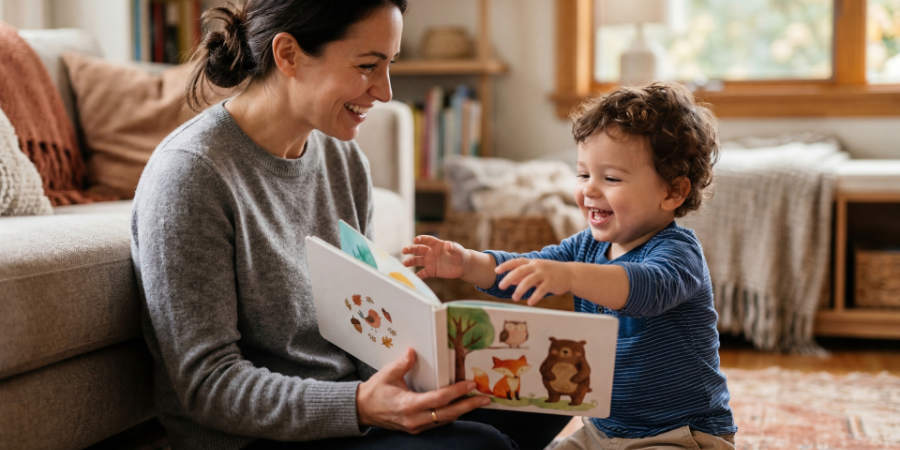
- Hand your toddler two physical books to hold, not a list of titles said out loud. Toddlers this age decide faster with something in their hands.
- Keep one familiar title in the mix if your child leans toward repetition, alongside one newer pick.
- Move the rest of the books out of sight during the choosing moment. A toddler who sees the full shelf will ask for it, no matter how good your basket is.
This piece on keeping a toddler interested during story time covers what to do once the book is picked and the reading itself needs to hold attention.
What to Do When Your Toddler Always Picks the Same Book
Many parents notice their toddler grabs the identical book night after night, and worry the “choice” isn’t a real choice anymore. Repetition at this age supports word learning and gives your child a sense of mastery over a story they know by heart. Why toddlers love reading the same book again and again walks through why that pattern is normal rather than a sign something is wrong.
If you want more variety without a fight, keep the familiar favorite as one of your two curated options and rotate the second slot each night. Your toddler still gets to choose, and the choice still means something, even if one option stays constant. Should you read the same bedtime book every night goes deeper into when to introduce something new and when to let a favorite run its course.
Keep the Choice Short, Keep the Story Time Long
The choosing step should take under a minute. If it stretches longer, the setup needs adjusting, not more patience. A toddler weighing two books decides fast. A toddler facing a shelf stalls, because there’s genuinely too much to sort through at that age.
Set a light boundary around the choosing moment itself. A short countdown, a line from a familiar song, or a simple “pick before I sit down” cue works well for most toddlers. Once the book is picked, move straight into reading. Toddler attention span breaks down how long your child will actually stay engaged once the story starts, which helps you plan the rest of the routine around a realistic window. How long should story time be for a 2 year old gives age-specific guidance for setting that total length.
A Simple Script for Story Time Choice
The exact words you use shape how fast the choice gets made. Open-ended questions slow toddlers down, because they don’t yet have the language or the patience to answer them well. Structured either-or questions work better.
Try phrases like:
- “Do you want the lion book or the boat book?”
- “One more book before bed. This one or that one?”
- “Pick with your hands. Point to the one you want.”
Each of these gives your toddler real control while keeping the decision small enough to finish quickly. Questions to ask during toddler story time that actually work has more phrasing you can use once the book is open and you want your toddler talking through the pages.
Two books beat ten every time your toddler sits down for a story. Curate the set before you offer it, hand over the choice, and keep the moment short. Story time stays something your child looks forward to, not something you negotiate every single night.
Sources
- American Academy of Pediatrics. Literacy Promotion: An Essential Component of Primary Care Pediatric Practice: Policy Statement. Pediatrics, 2024.
- Parent Provision of Choice Is a Key Component of Autonomy Support in Predicting Child Executive Function Skills. Frontiers in Psychology, via PMC.
- Maimaran, M. (2017). To Increase Engagement, Offer Less: The Effect of Assortment Size on Children’s Engagement. Judgment and Decision Making, 12(3): 198-207. Read the original study, summarized by Kellogg Insight.
- More Is More: Toddlers Do Not Show Choice Overload. Frontiers in Developmental Psychology.